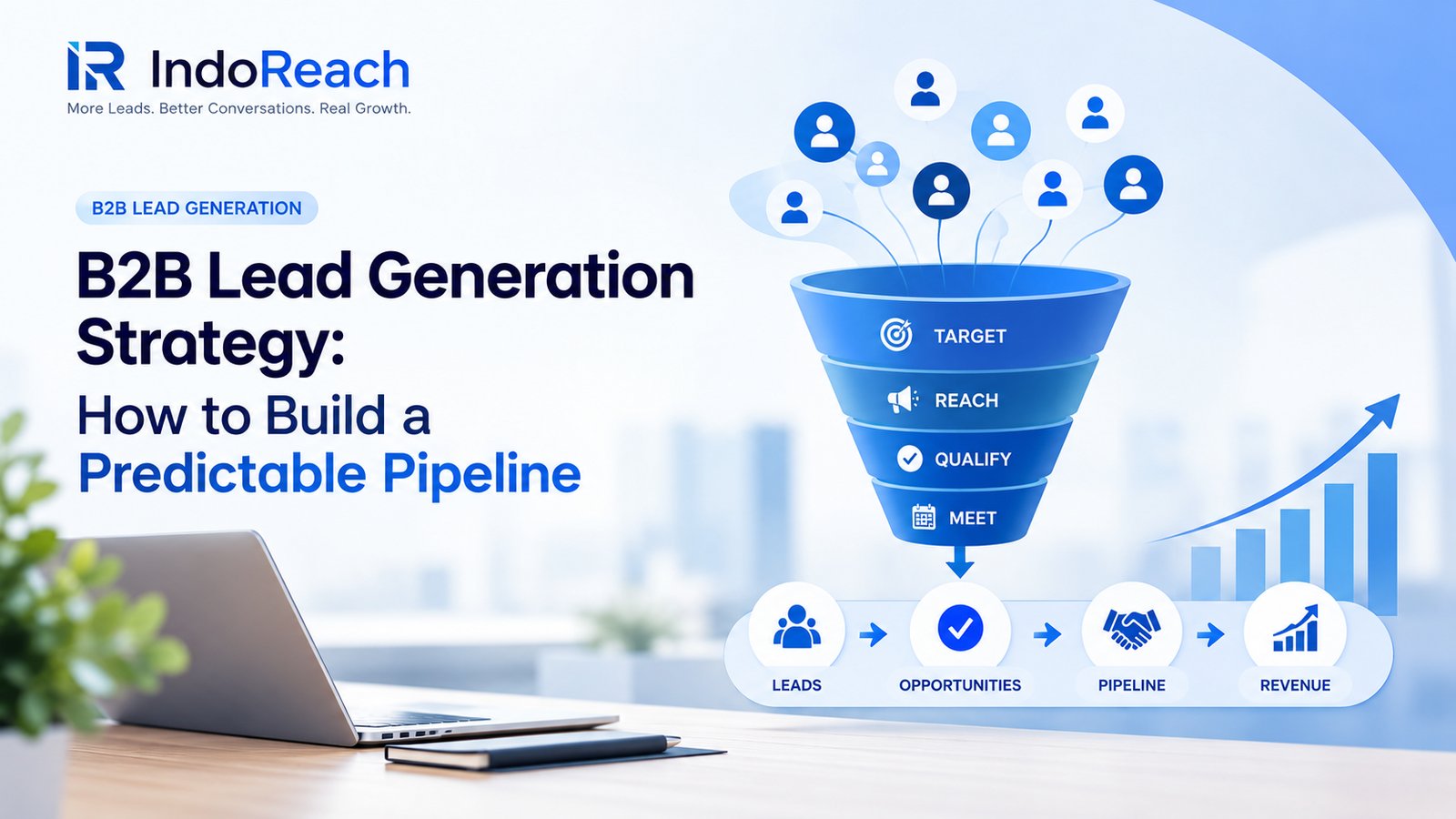
B2B Lead Generation Strategy: How to Build a Predictable Pipeline
A strong B2B lead generation strategy helps businesses consistently find the right prospects, start relevant conversations, qualify opportunities, and build a more predictable sales pipeline. Instead of relying on referrals or occasional campaigns, businesses can create a repeatable system for generating sales opportunities.
What Is a B2B Lead Generation Strategy?
A B2B lead generation strategy is the system a business uses to find potential customers and turn them into qualified sales opportunities.
In B2B markets, this process is more complex than simply attracting website visitors. Buying decisions often involve multiple people, longer sales cycles, specific business requirements, and higher purchase values.
That is why effective B2B lead generation starts with targeting. Businesses need to understand who they want to reach, what problems those companies face, and why their solution is relevant.
Why Businesses Need a Predictable Lead Generation System
Many businesses experience an inconsistent sales pipeline. One month may bring several opportunities, while the next month produces very little activity.
This usually happens when lead generation depends too heavily on referrals, occasional advertising, random outreach, or individual salespeople.
A structured system creates consistency. It gives marketing and sales teams a repeatable process for finding prospects and creating new conversations.
- More consistent prospecting
- Better targeting
- Higher-quality sales conversations
- Clearer pipeline visibility
- Better sales forecasting
- More efficient use of sales resources
The 6 Core Parts of a B2B Lead Generation Strategy
A successful strategy does not depend on one channel. Instead, several connected activities work together to move prospects through the buying journey.
1. Define Your Ideal Customer Profile
The first step is deciding exactly which companies you want to reach. This is commonly called an Ideal Customer Profile, or ICP.
Your ICP can include factors such as industry, company size, location, revenue range, technology, business model, and common business challenges.
A clear ICP prevents your team from spending time on prospects that are unlikely to become customers.
2. Identify the Right Decision-Makers
Once the target companies are clear, identify the people involved in the buying decision.
Depending on the product or service, this could include founders, CEOs, marketing leaders, sales leaders, operations executives, or department heads.
Reaching the right person improves the relevance of your messaging and reduces wasted outreach.
3. Build a High-Quality Prospect Database
Your lead generation system is only as strong as the data behind it. Outdated or inaccurate prospect information can waste time and damage campaign performance.
A useful prospect database should contain accurate company information, relevant contacts, job roles, websites, and other information that helps your team personalize outreach.
4. Use Multiple Lead Generation Channels
Different prospects respond to different channels. That is why a strong B2B lead generation strategy can combine several acquisition methods.
5. Create Relevant Messaging
Getting a prospect's attention is not enough. Your message needs to explain why the conversation is relevant to their business.
Effective B2B messaging focuses on the prospect's problem, desired outcome, and business context rather than simply listing services.
For example, instead of saying "We provide lead generation services," a stronger message could focus on helping a B2B company create a consistent flow of qualified sales opportunities.
6. Follow Up and Qualify Opportunities
Many potential opportunities are lost because there is no structured follow-up process.
Prospects may not be ready to buy when they first respond. Consistent, useful follow-up keeps the conversation moving without relying on memory or individual sales habits.
Qualification is equally important. Your team should determine whether the prospect fits your target market, has a relevant need, and is potentially able to move forward.
How B2B Lead Generation Creates a Predictable Sales Pipeline
Predictability comes from consistency and measurement.
When a business consistently targets the right prospects, reaches them through appropriate channels, follows up, and measures results, it can begin to understand how marketing activity turns into sales opportunities.
What Should You Measure?
A B2B lead generation strategy should be measured using business outcomes rather than vanity metrics alone.
- Qualified leads generated
- Positive responses
- Meetings booked
- Meeting-to-opportunity rate
- Opportunity-to-customer conversion
- Cost per qualified opportunity
- Sales pipeline generated
These measurements help identify which channels and campaigns are actually contributing to revenue.
Common B2B Lead Generation Mistakes
Even businesses that generate leads can struggle to create a reliable pipeline. The problem is often the process rather than the amount of activity.
Targeting Everyone
A broad audience may produce more contacts but often creates lower relevance. A focused ICP usually makes messaging and qualification easier.
Sending Generic Outreach
Prospects receive large volumes of generic sales messages. Your communication should demonstrate that you understand the prospect's business and reason for being contacted.
Ignoring Follow-Up
One message rarely represents an entire sales process. A structured follow-up system gives interested prospects more opportunities to engage.
Measuring Leads Instead of Opportunities
A large number of leads does not automatically mean a healthy pipeline. The quality of those leads and their ability to become genuine sales opportunities matter more.
How to Build Your B2B Lead Generation Strategy
Start with a simple framework rather than trying to launch every channel at once.
- Define your ideal customer profile.
- Identify the decision-makers within those companies.
- Build and verify a relevant prospect database.
- Select the channels that match your audience.
- Create problem-focused messaging.
- Build a consistent follow-up process.
- Qualify opportunities before passing them to sales.
- Measure results and improve the system.
How B2B Lead Generation Builds a Predictable Sales Pipeline
Learn how a structured lead generation process can create a more consistent flow of qualified sales opportunities.
Read the related guide →Final Thoughts
A strong B2B lead generation strategy is not about generating the largest possible number of contacts. It is about creating a repeatable system for reaching the right businesses, starting relevant conversations, qualifying opportunities, and supporting sales.
When these activities work together, businesses gain better visibility into their pipeline and can make more informed decisions about growth.
The objective is simple: create more of the right sales conversations, consistently.
Turn Your Lead Generation Into a Repeatable Growth System
IndoReach helps businesses build targeted B2B lead generation systems designed around qualified prospects, meaningful conversations, and measurable growth.
Talk to IndoReach →Frequently Asked Questions
What is a B2B lead generation strategy?
It is a structured process for identifying target businesses, reaching decision-makers, generating interest, qualifying prospects, and creating sales opportunities.
What is the best B2B lead generation channel?
There is no single best channel for every business. The right mix depends on the target audience, buying process, industry, offer, and sales cycle.
How does lead generation improve sales pipeline predictability?
Consistent targeting, outreach, qualification, follow-up, and measurement create a repeatable flow of sales opportunities that gives businesses better pipeline visibility.
Should B2B companies use multiple channels?
In many cases, yes. Combining channels such as SEO, email, LinkedIn, paid search, and content can help businesses reach prospects at different stages of the buying journey.